
Footfall is not demand
Footfall measures how many people passed your store, not how many walked in with intent to buy. The ratio between the two is the signal.
Footfall is not demand. It is proximity.
Every retailer tracks footfall. Few question what the number actually means. A window-shopper and a buyer with a credit card in hand register identically: one count.
High footfall with low conversion is not a busy store. It is a leaky store.
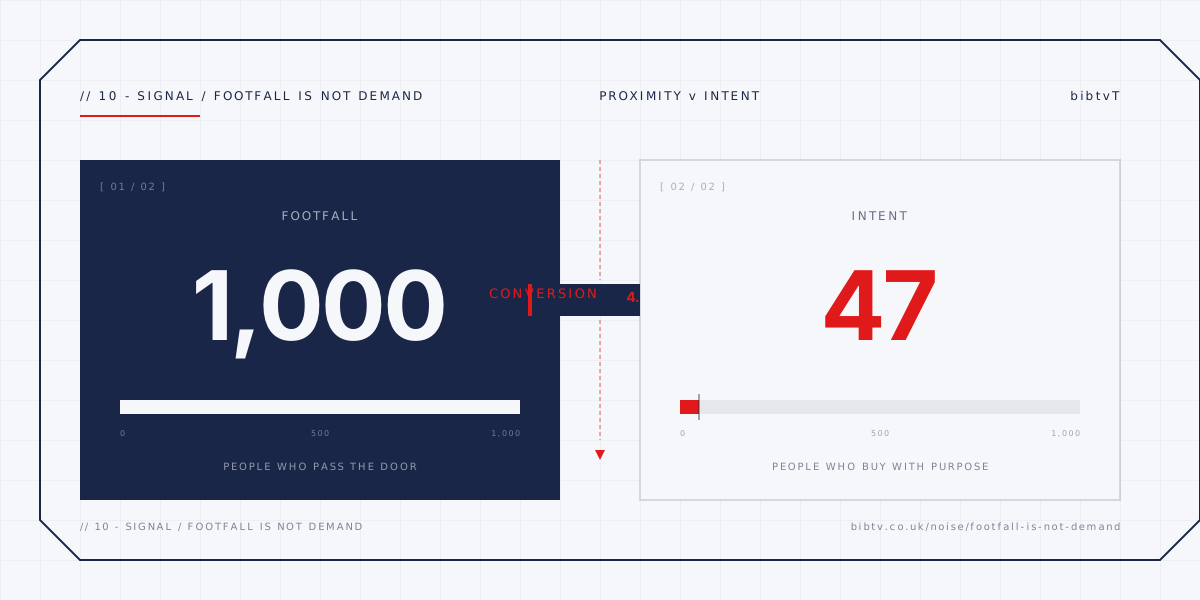
The metric that matters is intent per square foot. How many people entered with a purchase goal and followed through? The ratio — conversion-ready behaviour divided by total traffic — correlates with revenue. Footfall alone tells you nothing about performance.
In smart retail deployments, the first rule is: stop treating footfall counters as success metrics. Wire the point-of-sale data to the traffic data. Watch the ratio, not the raw count. When it drops, you have a specific problem: merchandising, staffing, pricing, or queue flow. Footfall gives you none of those signals.
One number is a vanity metric. The relationship between two numbers is signal.
This applies beyond retail. Dashboards, websites, help desks — any system counting traffic without measuring intent is counting noise. The right question is not "how many?" It is "how many with purpose?"