
Mission control isn't a dashboard
Anonymised engagement — national retail chain, 84 sites. The brief: give the ops team something they actually look at.
Anonymised engagement. National retail chain, 84 sites. The brief: give the ops team something they actually look at.
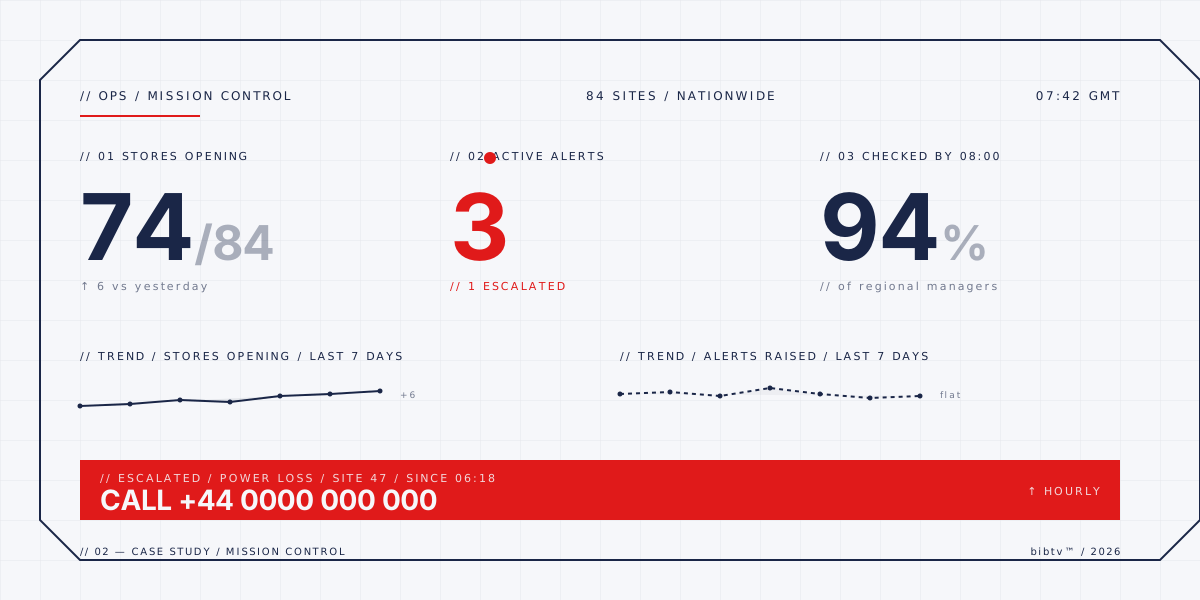
We didn't ship a dashboard. We shipped a single screen with three numbers, two trends, and one red light. Each number had a name. Each trend had a story. The red light had a phone number behind it.
Built in Next.js. Deployed to Vercel. Telemetry from the existing BMS via MQTT, no new sensors, no rip-and-replace. Designed in 4 days, shipped in 3 weeks. The hard part wasn't the engineering. It was getting the operators to tell us which three numbers actually mattered.
Adoption in 30 days: 94% of regional managers checked it before 08:00. The 6% who didn't were the ones with no stores opening that day.
Mission control works because it tells you what to do, not what's true. Dashboards describe. Mission control decides.