
We wired the floor before we touched the BMS
Anonymised engagement — 28-storey office tower, central London. The contractor wanted six figures to replace the BMS. The fix was a three-month measurement pass.
Anonymised engagement. 28-storey single-asset office tower, central London. One facilities director, one outsourced mechanical and electrical contractor. The brief: tenant complaints about temperature swings on floors 18 to 22. Summer peak, south-east corner, predictable complaints and predictable pattern. The reflex from the zero-hype framework applied — is the data deterministic? — and the answer was no. The BMS reported whatever its last calibration round said, and that round was six years ago.
We did not touch the BMS for the first three weeks. We deployed a mesh of 92 wireless sensors across the floor plates and the plant room, all running on the building's own LoRaWAN, with reference probes in two plant rooms for ground truth. Twelve weeks of data. The point was to find out whether the complaints were a control problem (the BMS logic), a calibration problem (the sensors), or a building problem (the fabric). All three were candidates. We did not know which.
The finding, when it came, was that calibration was first, control second, fabric third. The sensors reported nominally against the BMS, but the BMS had been calibrated against an empty floor. At 80% occupancy the south-east floors were two degrees warmer than the BMS thought. The control loop was correct. The inputs were wrong.
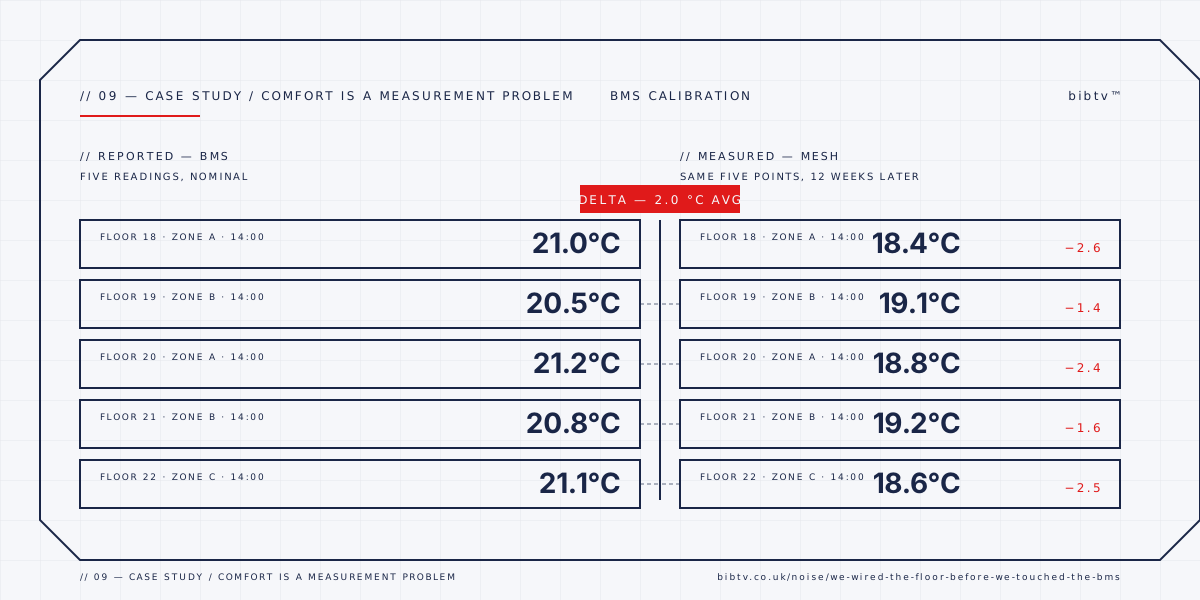
The fix was three months of measurement plus a recalibration pass on all 480 BMS sensor points, two-zone HVAC retuning, and sealing identified fabric leaks on the south-east corner. The contractor had wanted to replace the BMS at six figures. The actual fix was low five figures. The tenants stopped complaining within two weeks of the recalibration landing.
Tenant comfort is a measurement problem dressed as a service problem. The instinct is to make the symptoms louder — more alerts, more dashboards, more meetings — until someone fixes the underlying cause. The cheaper move is to make the measurement accurate first, then look at the symptoms again. Most of them go away.